Exploring the Story Behind You’ll Find Him There with Ernie Haas

JEFF TURNER

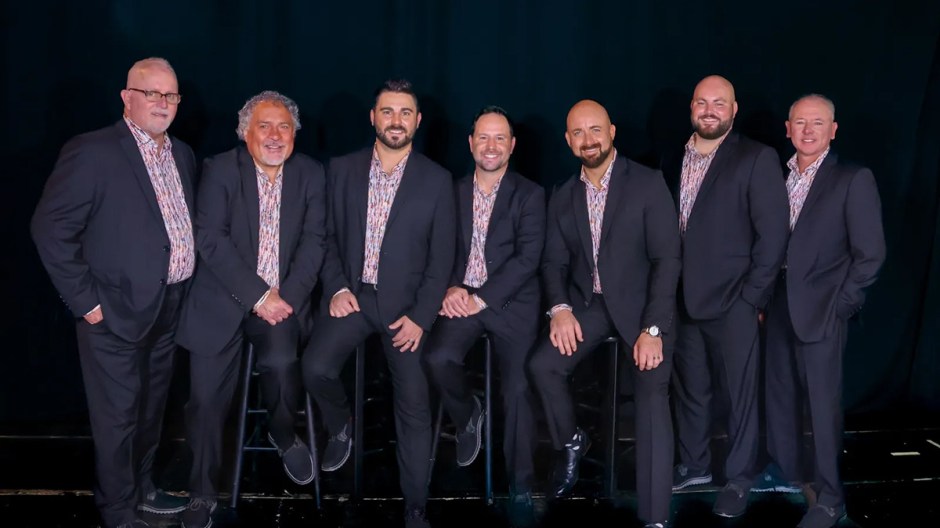
In a recent interview with Texas Gospel, Ernie Haas shared about his musical journey and his song You’ll Find Him There. The single is featured on the Ernie Haas and Signature Sound project Live in Memphis. Originally written in 2016 for the Clear Skies project, the song was created by Haas, Joel Lindsay, and Wayne Hahn. Despite being part of a successful album, it did not receive much focus at the time. Haas explained that the new recording allowed the song to fit better within its spiritual context, reflecting the heritage of Southern Gospel music.

(Link provided to YouTube by The Orchard Enterprises)

Haas mentioned that many industry professionals thought the song must have come from one of the old-time Gospel groups. “A lot of the industry people are reaching out to us saying, where’d you find that song? Thinking that maybe I had it on an old cathedrals or statesman recording, and I’m and I was happy to smile and say, you know, the Lord gave us that song, and I’m glad that you like it!”

He appreciates the positive response and enjoys sharing that it is an original song. He added that some listeners prefer old songs and often request new music with a timeless quality. He finds it rewarding to see You’ll Find Him There achieving that goal.

The song is inspired by a well-known Old Testament passage where Elijah hears God’s voice as a still, small sound rather than in dramatic natural events. Haas said this story guided the message of the song, which encourages listeners to pause and listen for God amid life’s chaos.

(Photo Erniehaase.com)

“God is a gentleman,” Haas noted. “He’ll never scream at you. Love is always calling in a whisper, and you have to be still to hear it.”

Haas also discussed the songwriting process. He finds joy in collaborating with trusted colleagues like Lindsay and Hahn. For him, the process of creating something new with supportive partners is meaningful. After completing a song, he often shares it with his wife, Lisa, whose feedback helps him gauge how it might connect with a broader audience. He values her honest and constructive input.

Haas noted that life’s distractions and overwhelming noise can make it hard for people to hear God. He compared this to biblical accounts where Peter lost focus during a storm, looking at the waves instead of Christ. The song’s message is about finding peace in God’s presence, even during difficult times. Haas believes that challenges help people grow spiritually, focusing on Christ rather than personal comfort.

Haas concluded by emphasising that the goal of the song is to help listeners connect with Christ. He described the result of faith as a personal relationship with God, where both the believer and God are content together. “I need help. And the end result is Christ Himself, our hope, our glory. The end result isn’t what we think we need in life. We are very needy people, but the end result is Christ Himself, the still small voice, love himself, looking at us and us looking at him, and together, we are happy.”

You’ll Find Him There aims to encourage reflection and faith in a world filled with distractions.

Texas Gospel Canada Top 30 – December 2024

DAVID INGRAM

Welcome to the Texas Gospel Canada Top 30 Songs list for December! This list is meticulously compiled based on the actual number of plays each song received in the previous month (November.) The Texas Gospel Top 30 is proudly submitted to top Southern Gospel publications including The Singing News and SGNScoops.

1 Down East Boys – Graveyard
2 Gold City – When it’s gone for good
3 Collingsworth Family – Praise The Lord
4 Red Words – The Erwins
5 Jim And Melissa Brady – Covered
6 LeFevre Quartet – The Things We Cannot Change
7 The Sound – Jeans and Jesus
8 Down East Boys – Something to shout about
9 Earnie Haase & Signature Sound – You’ll find Him there
10 The Kramers – I Know There’s a Heaven
11 Brian Free & Assurance – Grateful For the Gospel
12 Gordon Mote – He Forgives and Forgets
13 Kingdom Heirs – Until prayer changes me
14 Heart 2 Heart – When The Saints Begin To Pray
15 The Hoppers – Glory Up Ahead
16 Les Butler and Friends – My Bible
17 Sound Street – Through the furnace fire
18 Susan Whisnant – Faith In Place
19 Lee Park Worship – Why Wouldn’t I Run
20 Nelons – There’s a Hole in the Heart
21 Lauren, Amber & Kenna – Won’t be me
22 The Allens – Cross Over (Radio Edit)
23 Exodus – Blood-bought child of the king
24 Scotty Inman – Man On The Middle Cross
25 Doug Anderson – Until it was me
26 The Bibletones – I’m standing firm
27 2nd Chance Ministries – Find My Hallelujah
28 Triumphant Quartet – Big old stone

29 TrueSong – Jesus 1 Death 0

30 The Chitans – Shoulder to Shoulder

The Cathedral Quartet: A Legacy in Southern Gospel Music

TEXAS GOSPEL VOLUNTEER

The Cathedral Quartet, often referred to as “The Cathedrals,” was a prominent name in Southern Gospel music, known for their impactful ministry and memorable performances. They began their career in 1963 as the Cathedral Trio, featuring Glen Payne as lead singer, Bobby Clark as tenor, and Danny Koker as baritone. Initially, they performed as the resident music group for evangelist Rex Humbard’s ministry at the Cathedral of Tomorrow in Akron, Ohio. In 1964, their sound expanded with the addition of bass singer George Younce, formerly of the Blue Ridge Quartet, marking the beginning of their 35-year legacy.

For seven years, the group traveled with Humbard’s evangelistic team, performing at various events and services. In 1969, founding members Payne and Younce decided to establish the group as an independent touring ensemble. This transition allowed them to dedicate themselves fully to their music, though it also led to the departures of Clark and Koker. Despite these changes, they continued to operate out of Stow, Ohio, maintaining their connection to the region.

The Cathedrals faced numerous challenges in their early days, with a revolving door of members filling positions for tenor, baritone, and pianist. Stability finally arrived in 1974 when the lineup included Roy Tremble as tenor, George Amon Webster as baritone, and Haskell Cooley as pianist, alongside Payne and Younce. That year, their single “The Last Sunday” marked a turning point, gaining airplay and bringing the group wider recognition within Southern Gospel circles.

During the late 1970s, their popularity continued to grow, aided by their involvement in Bill Gaither’s PraiseGathering events, which introduced them to new audiences. However, 1979 proved to be a difficult year when Tremble, Webster, and pianist Lorne Matthews left to form their own group. Undeterred, Payne and Younce rebuilt the quartet, bringing in tenor Kirk Talley and baritone Steve Lee. Later that year, they also hired a young pianist, Roger Bennett, who became a pivotal member of the group.

By 1980, the addition of Mark Trammell as baritone completed what many fans consider one of the group’s most iconic lineups. This period solidified the Cathedrals’ position as a leading force in Southern Gospel music. In 1983, Talley left and was replaced by Danny Funderburk, whose vocals were featured on several fan-favorite recordings, including Symphony of Praise. Pianist Gerald Wolfe joined the group in the late 1980s, contributing both instrumentally and vocally on hits like “Champion of Love,” before Bennett rejoined in 1988.

The 1990s brought additional member changes. In 1990, Ernie Haase became the group’s new tenor, while Scott Fowler joined as baritone later that year. This lineup—consisting of Payne, Younce, Haase, Fowler, and Bennett—remained intact until the group retired. Despite health setbacks, including Younce’s heart issues and Payne’s cancer diagnosis, they continued performing, bringing encouragement to audiences across the country.

In early 1999, the Cathedrals announced their decision to retire due to Younce’s declining health. Their farewell year was a bittersweet time, marked by both celebration and sorrow. Payne’s passing during the final tour deeply affected fans and members alike, with Bennett stepping in to sing his parts for the remaining concerts.

When the Cathedrals disbanded at the end of 1999, they left an enduring legacy of heartfelt music and unwavering faith. Their contributions to Southern Gospel continue to inspire artists and listeners, cementing their place in the history of the genre.

Gospel Music Legends: The Enduring Legacy of the Blackwood Brothers Quartet

JEFF TURNER

One of my earliest memories of Gospel music growing up is the harmony of The Blackwood Brothers Quartet. The group, has been around for more than nine decades.

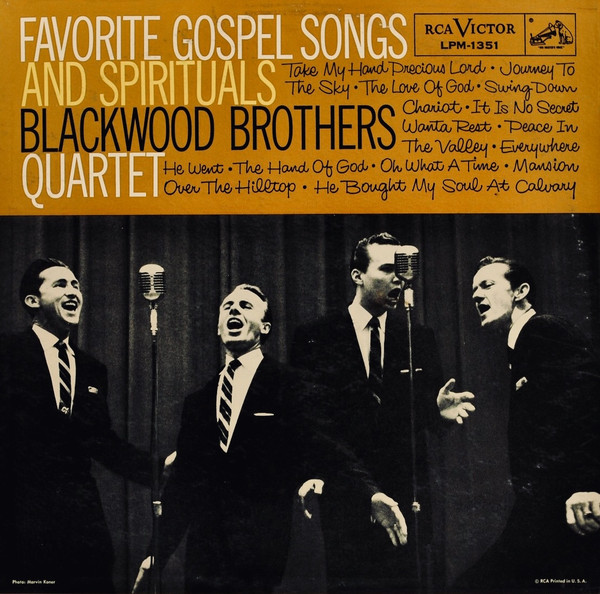
1956 Re-release of Favorite Gospel Songs and Spirituals ablum

The Blackwood Brothers Quartet was founded in 1934 during the Great Depression, emerging from a deeply musical Mississippi family. It started as the Choctaw County Jubilee Singers featuring brothers Roy, Doyle, and James Blackwood, along with Roy’s young son R.W. Their musical journey began with local performances and radio broadcasts, eventually expanding to national recognition.

The group experienced significant challenges, including a tragic airplane crash in 1954 that claimed the lives of R.W. Blackwood and bass singer Bill Lyles. Despite this devastating loss, the Blackwood Brothers continued, with family members and talented musicians stepping in to maintain the group’s musical legacy.

Throughout their career, the quartet traveled through every Canadian province, all fifty United States, and appearances throughout Great Britain, Europe, Africa, and Asia. They became a cornerstone of Gospel music, setting industry standards and innovating performance practices.

The Ultimate Blackwood Brothers: 80 Years – 80 Songs, released in 2015 by Daywind Records

Notable achievements include winning Arthur Godfrey’s Talent Scouts competition, launching the National Quartet Convention, and pioneering tour bus customization for musical groups. They also made significant chart history, with their song “Learning To Lean” holding the number one spot on the Singing News chart for an unprecedented 15 months.

The group has seen multiple generational transitions. James Blackwood’s sons, Jimmy and Billy, have been instrumental in continuing the family’s musical tradition. Recent years have brought further changes, with new members like Jonathan Mattingly, Eric Walker, and Jim Rogers joining to keep the quartet’s spirit alive.

Despite periods of disbandment and reorganization, the Blackwood Brothers remain a respected name in Gospel music.

The latest makeup of the Blackwood Brothers include Billy Blackwood, Baritone; Jim Rogers, Tenor; Jonathan Mattingly, Lead; and Eric Walker, Bass.

Artist Spotlight: The Kingsmen

SPECIAL CROSSROADS RECORDS

For more than half a century, no other group has secured such a far-reaching legacy as that of The Kingsmen Quartet. Since 1956, this group has risen from humble beginnings in the mountains of western North Carolina to become one of the most beloved and innovative groups in Christian music. Countless renowned artists have been a part of this great lineage, such as Eldridge Fox, “Big” Jim Hamill, Ray Dean Reese, Squire Parsons, Johnny Parrack, Anthony Burger, Ernie Phillips, Gary Sheppard, and a host of others. The momentum has not stopped as this group continues to help define the Southern Gospel genre for a whole new generation of music lovers, perhaps more so than any other group.

In the mid-fifties, brothers Raymond, Reese, and Louis McKinney formed a gospel group, traveling locally throughout the western part of the Carolinas and completing dozens of recordings by the late 60’s. By the early 70’s, area natives Eldridge Fox and Ray Dean Reese joined this emerging quartet and in 1974 released their first live recording, “Big & Live” consisting of Fox, Reese, Jim Hamill, and Johnny Parrack. This Dove award winning album brought to gospel music, fresh arrangements and catchy melodies that would later become southern gospel classics, such as “Glory Road,” “Look for Me At Jesus Feet,” and “Love Lifted Me.” This would be the start of many legendary live albums for the Kingsmen. Traveling with a live band, the Kingsmen became one of few groups during this era to be able to perform with three to five musicians, granting them individuality and innovation in the industry.

Always seeking to have a creative edge, they began introducing themselves as, “The Ton of Fun.” Through the late 1970’s and 80’s, more hits were churning from albums such as “Chattanooga Live,” “Live Naturally,” & “Live at The University of Alabama.” These albums combined with high energy and up-tempo music brought music lovers an exciting brand of showmanship. Songs like, “Old Ship of Zion,” “Shake Hands with a Poor Boy,” “Beautiful Home,” “Saints Will Rise,” and “Child, Child” became gospel music staples. In 1981, “Excuses” became the Kingsmen’s biggest hit of that era; it was steady at number one for 18 months, making it the longest running number one song in Southern Gospel Music history.

The successes of The Kingsmen have led to many prestigious opportunities. In 1977, The Kingsmen performed on the south lawn of the White House for President Jimmy Carter and in 1982 they performed at the opening ceremony of the World’s Fair in Knoxville, TN which was broadcast on local and regional TV, with President Ronald Reagan present to open the fair. The Kingsmen was also the first group to film and record a live performance at the famous Grand Ole Opry in Nashville and in 2000 they were inducted into the Gospel Music Hall of Fame followed by the Christian Music Hall of Fame in 2008. They’ve garnered multiple dove awards and numerous Singing News Fan awards including favorite bass vocalist, tenor, baritone, lead, instrumentalist, video, the 1992 favorite song “Wish You Were Here” as well as favorite album by the same name, male quartet of the year, and group of the year. The Kingsmen band was voted favorite band a record 17 times making this quartet one of the most awarded groups in Southern Gospel Music.