
Understanding Pentecost and the Church today

JEFF TURNER

In the account of the day of Pentecost in Acts 2, God sent His Spirit, the apostles spoke God’s message, and many people took notice of what was happening. This caused some believe that every church gathering today should aim to have the same kind of experience.

However, when the full context is considered, that expectation does not match the purpose of that event. The coming of the Holy Spirit at Pentecost was not meant to be repeated in the same way at every meeting. It was a unique moment in history that marked the beginning of the church.

During that time, the Holy Spirit came in a visible and clear way, described as something like divided flames resting on each person. This was not a normal or ongoing event but a sign that something new had begun. The apostles also spoke in different languages, and these were real, known languages. People from various regions were able to hear the message in their own speech. The text in Acts 2 even lists these languages to show that this was not random or unclear speech.

This moment shows that God was at work in a new way and that the church had been established. There are a few other moments in Acts where similar signs appear. These happen when new groups of people are brought into the church, such as the Gentiles and followers connected to John the Baptist. In each case, the signs confirm that they are included in the same body of believers as those at Pentecost. Even so, these events are limited and serve a clear purpose in the early history of the church.

The events in Acts 2 were meant to mark the start of something important, not to set a standard for every gathering that follows.

 but you will receive power when the Holy Spirit has come upon you; and you shall be My witnesses both in Jerusalem and in all Judea, and Samaria, and as far as the remotest part of the earth.”

Acts 1:8
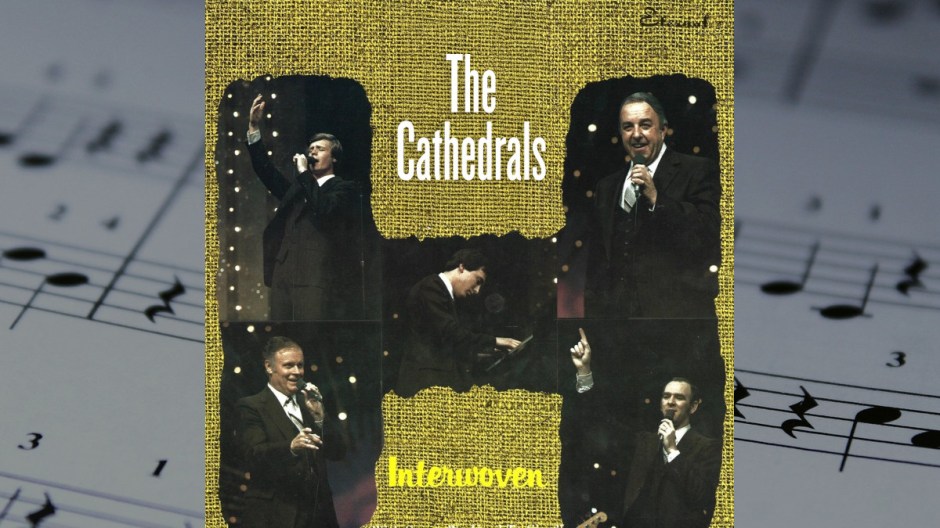
The Cathedrals’ Interwoven streams for the first time, decades after the group’s farewell

TEXAS GOSPEL VOLUNTEER

For more than two decades, a particular recording by The Cathedrals sat largely beyond reach for most gospel music fans, available only to those lucky enough to own the original physical release. That changes now. Interwoven, one of the beloved quartet’s most cherished albums, has made its debut on digital streaming platforms for the first time, released through StowTown Records with the support of the families of founding members Glen Payne and George Younce.

It is, by any measure, a long time coming.

The Cathedrals were active from 1964 to 1999, rising from their origins as the house group for the Cathedral of Tomorrow church to become what many consider the most popular gospel quartet of their era. Payne and Younce were the heart of that sound, their voices and ministries inseparable from the group’s identity. When the quartet retired in December 1999, they left behind not just recordings but a generation of artists they had mentored, including Ernie Haase, Scott Fowler, Roger Bennett, Gerald Wolfe, Mark Trammell and Kirk Talley.

Interwoven captures the quartet at the height of that artistry. The album is a collection of standards and hymns, rich in harmony and deliberate in its emotional weight, featuring Payne and Younce alongside Kirk Talley and Steve Lee, with Roger Bennett’s piano work anchoring the arrangements throughout. A song like “No Tears In Heaven” illustrates what made the group so enduring: voices in service of something larger than performance, delivering a message of hope that still registers decades after the recording was made.

For Darla Payne, daughter of the late Glen Payne, the release carries a weight that goes well beyond nostalgia. “Interwoven is more than a re-release,” she said. “For our family, it is the continuation of a ministry that meant everything to Dad and to George. These songs brought hope, encouragement and joy to so many people through the years, and we are grateful that listeners can now experience this music again in a new way through streaming platforms.”

That gratitude is not simply sentimental. The Cathedrals have never entirely faded from cultural memory, sustained by devoted fan communities, tribute pages and listeners who have continued passing the recordings along for years. But streaming opens a different kind of door, one that allows a younger audience to encounter the music without needing to track down a physical copy or inherit it from a grandparent’s collection. It is the difference between preservation and genuine accessibility.

StowTown Records, which distributes through Sony/Provident, has positioned the release as both a celebration of what The Cathedrals built and an opportunity for the music to find a wider audience than it has reached in years. Whether that audience arrives already familiar with gospel quartets or entirely new to the form, Interwoven makes a convincing case for why The Cathedrals still matter. The harmonies are tight, the arrangements are confident, and the sense of conviction behind the performances is unmistakable.

Twenty-five years after the group sang their last notes together, it turns out there was still something waiting to be heard.

Courage to speak the truth

JEFF TURNER

The idea of sharing one’s faith can make people feel eager, while others feel uneasy or even afraid. These reactions are not unusual. The New Testament speaks to these feelings and addresses them directly. In Romans 1, Paul says he is not ashamed of the gospel.

While some believers would agree with Paul, they also admit that speaking about their faith can make them nervous. There is an important difference between feeling anxious and feeling ashamed. Anxiety can come from the difficulty of the message itself. When speaking to someone who is trying to feel good about their life, the message of the gospel brings a hard truth. It tells them that they are sinful and stand guilty before God, facing judgment. This is not an easy way to begin a conversation, and it can make anyone feel uneasy.

When talking about salvation, there must be an understanding of what a person is being saved from. It is not about finding meaning or purpose. It is about rescue from eternal judgment because of sin. .

One helpful way to begin may be to focus first on that good news. A simple opening, such as telling someone that you have something important and good to share, can make the first step easier. From there, the deeper parts of the message can follow. In the end, the call is to move past fear and speak with honesty.

The message is serious, but it also carries hope, and that is worth sharing.

For God has not given us a spirit of [a]timidity, but of power and love and discipline.
Therefore do not be ashamed of the testimony of our Lord or of me His prisoner, but join with me in suffering for the gospel according to the power of God,

2 Timothy 1:7–8

When a nation turns away

JEFF TURNER

When looking at the spiritual direction of a nation, certain patterns can be seen over time. Sometimes, there are signs that reflect a shift away from belief in God. Some begin to debate if God is not real or does not matter.

Another concern is the growing acceptance of behaviours the Bible says are sinful. These changes bring to mind the teaching found in Romans 1. The passage speaks about God allowing people to follow their own sinful desires, leading to impurity, shameful actions, and a mind that no longer thinks clearly about right and wrong.

The phrase “God gave them over,” which appears several times in Romans, carries an important meaning. It was used in a legal sense to describe someone who had been judged guilty and then handed over to face the result of that judgment. In this biblical context, it shows that God allows a nation to move forward in its chosen path when it rejects Him.

This pattern has been repeated many times throughout history. People begin with a knowledge of God, but they choose to turn away from that truth. Instead, they create their own beliefs and follow their own desires. There is also a clear order in this decline. It begins with general sexual sin, then moves into homosexuality, and finally leads to a state where the mind is no longer able to judge rightly.

When a society starts to accept and even celebrate these things, it becomes a sign that judgment is already taking place. It is not only about future consequences but about what is happening in the present. The condition of the culture shows the result of turning away from God.

In light of this, the proper response is not only concern but also prayer. There is a need to ask God for mercy and to seek a renewal of the message of the gospel. A change in direction can only come through His grace.

 being darkened in their understanding, excluded from the life of God because of the ignorance that is in them, because of the hardness of their heart; and they, having become callous, have given themselves up to indecent behavior for the practice of every kind of impurity with greediness.

Ephesians 4:18–19

Faith shared without limits

JEFF TURNER

Some people who want to share their faith look for guidance in books and resources from the local Christian bookstore. And it is here they often find different ideas that do not always agree. Some teachings suggest a quiet approach. They say a person should prepare their heart, then wait for God to bring someone into their life who is ready to hear the message. Other teachings encourage action. They point to the words of Jesus Christ in Gospel of Matthew, where he calls his followers to go out into the world and share the good news with everyone. How are believers to speak to others about their faith? Instead of looking for a “one size fits all,” consider what the Bible says. The instruction to go into all the world does not set boundaries. It opens the door to many ways of reaching people.

Sharing the message can happen in many places and situations. It may take place from door to door, on the street, in a classroom, or between neighbours. It can happen during times of work, in moments of rest, or even in difficult settings like conflict or competition. It can grow through friendships or simple conversations. The point is that there is no limit to where or how the message can be shared. The call is to speak about it at all times and in all places.

Our faith is not limited by method, but it is guided by truth. And our focus should remain on presenting the message honestly and fully, so that those who hear it understand what it truly means.

How then are they to call on Him in whom they have not believed? How are they to believe in Him whom they have not heard? And how are they to hear without a preacher? But how are they to preach unless they are sent? Just as it is written: “How beautiful are the feet of those who bring good news of good things!”

Romans 10:14–15