People often wonder how much control Satan has over the evil we see today. When we look at corruption in government, harmful messages in entertainment, or false teachings spreading through society, we might ask if the devil is personally directing these things. The answer is not simple.
Jeremiah 17:9: “The heart is more deceitful than all else And is desperately sick; Who can understand it?, NASB; IRS Images, 2025
Even without Satan, the world would be full of evil. This is because human nature is fallen. The Bible tells us that the human heart is deceitful and wicked. People naturally struggle with desires of the flesh, covetous eyes, and pride. We do not need the devil to make us sin. We are already inclined toward it.
What Satan adds to this picture is structure. He takes human sinfulness and organizes it. He builds it into systems that trap people. He creates false religions that lead souls away from truth. He develops harmful philosophies and ideas that sound reasonable but lead to destruction. Satan works like a deceptive angel of light, making evil look appealing and acceptable.
He does not control every individual action, but he shapes the larger systems where fallen humans act out their sinful nature. Through his demonic forces, he influences governments, schools, entertainment industries, and other institutions to serve his purposes. The apostle John wrote that the whole world lies in the power of the evil one. This means Satan has arranged an organized system of evil that surrounds us.
Understanding this helps us recognize that we face both internal struggles with our own sinful hearts and external pressures from a world system designed to pull us away from God.
We know that we are of God, and that the whole world lies in the power of the evil one.
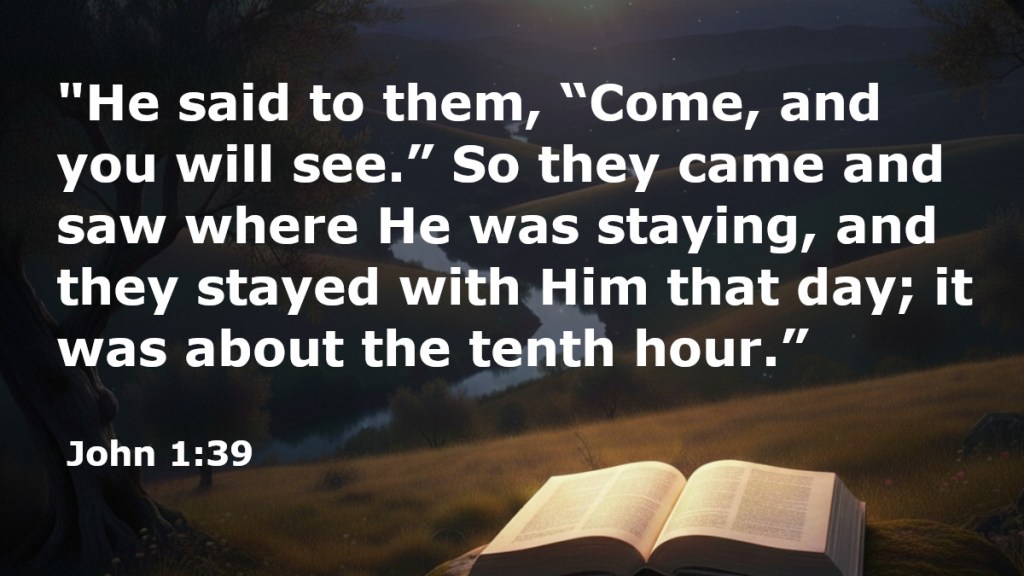
Sharing faith doesn’t require theological expertise or complex arguments. Early followers of Jesus used three simple words: “come and see.”
When Andrew found Jesus, he immediately brought his brother Simon Peter with this invitation. When Philip invited Nathaniel, who questioned whether anything good could come from Nazareth, Philip simply replied, “Come and see.”
This approach focuses on bringing people to experience faith firsthand rather than engaging in debates. One invitation can have eternal impact—Peter’s later teaching at Pentecost resulted in 3,000 conversions.
Believers need only willingness to extend a simple invitation.
Mark Bishop has released a new single through Sonlite Records, and it carries a message as timeless as the book it points to. Titled “You Better Go Read It,” the song follows his previous release “The Fishing Pole,” a quieter, country-flavoured reflection on life’s journey, and marks a clear shift in mood. This new track is upbeat and soulful, built on a syncopated rhythm and wrapped in a spirit of joyful urgency.
The idea behind the song came from an everyday moment most people know well. Bishop explained it this way: “How many times has a strange icon lit up on the dashboard of your car, and you have to fish out the owner’s manual in the glove compartment to figure out what’s going on? Wouldn’t it be great if we had a manual for when our lives needed some tune-up or repair? Guess what… we do!”
The answer, as Bishop sees it, has been there all along. “But it doesn’t do you any good if you don’t go read it,” he said.
“All of the answers are right there. It’s called the Bible, and it’s an owner’s manual for your life. Yours. Our newest song, ‘You Better Go Read It,’ is a playful, happy reminder that God has given us a gift… a roadmap… an instruction book… an insurance policy. But it does you no good if you don’t read it.”
That lighthearted but pointed tone comes through from the very first lines of the song, where Bishop sets the scene with a direct question to the listener: Can I have your attention? This’ll only take a minute. You’re runnin’ in the rat race. Now how ya’ gonna win it? Do you know where you’re going? When the journey’s through? Got any idea… who might be waitin’ for you?
The chorus opens things up further, with label mate Amber Lynn joining Bishop in alternating harmonies that give the song an energetic back-and-forth feel: You better go read it. It’s right there in the Word. You’re really gonna need it. Maybe you haven’t heard, There’s a hell and a heaven, there’s a right way and a wrong. By the end of the journey, who’s side will you be on? There’s a road map… you get to see it. But you better go read it.
The single also marks a milestone for someone close to Bishop. “I am especially excited for you to hear this new song,” he said, “because it also features my friend and live concert piano player, Tony Gross. If you’ve come to any of our concerts, you already know how talented this young man is on the keys. Well… now you can hear Tony play whenever you want to. Ladies and gentlemen… I present to you, recorded for the first time, the musical talents of Tony Gross on our newest song… ‘You Better Go Read It’!”
The measure of genuine salvation is not found in what someone claims to know or says they believe. Instead, it is revealed through how a person actually lives their daily life. This practical test of faith centers on whether someone walks in the Spirit or continues following the desires of their old nature.
For the desire of the flesh is against the Spirit, and the Spirit against the flesh; for these are in opposition to one another, in order to keep you from doing whatever you want. Galatians 5:16-17; IRS Images, 2025
When a person becomes a Christian, an immediate internal conflict begins. Before conversion, people simply do whatever they want, following their natural desires without spiritual resistance. However, once someone truly comes to Christ, the Holy Spirit takes residence within them and begins leading them toward God’s ways. This creates tension between what the flesh wants and what the Spirit desires. The flesh refers to more than just physical temptations. It encompasses everything related to self-centered living, including self-promotion, selfish priorities, and insisting on one’s own way. This stands in direct opposition to life in the Spirit, which operates through submission to God.
Christ provides the perfect model of this submitted life. Although He was God, He chose to submit fully to the Father’s will. He possessed the Spirit completely and demonstrated what it means to walk in obedience rather than self-will. This same struggle between flesh and Spirit defines the Christian experience. The flesh constantly seeks its own exaltation while the Spirit calls believers toward obedience to God’s word.
Take my life, and let it be Consecrated, Lord, to Thee. Take my moments and my days; Let them flow in ceaseless praise, Let them flow in ceaseless praise.
The works of the flesh are not mysterious or hidden. They include sexual sins like adultery, fornication, uncleanness, and inappropriate behavior. They also encompass false religious practices such as idolatry and sorcery. Additionally, they involve destructive social behaviors including hatred, quarreling, jealousy, angry outbursts, etc. Those who continuously practice such things without repentance will not inherit God’s kingdom. This warning addresses people who make these sins their lifestyle and refuse to abandon them, not believers who occasionally stumble but genuinely desire to live righteously.
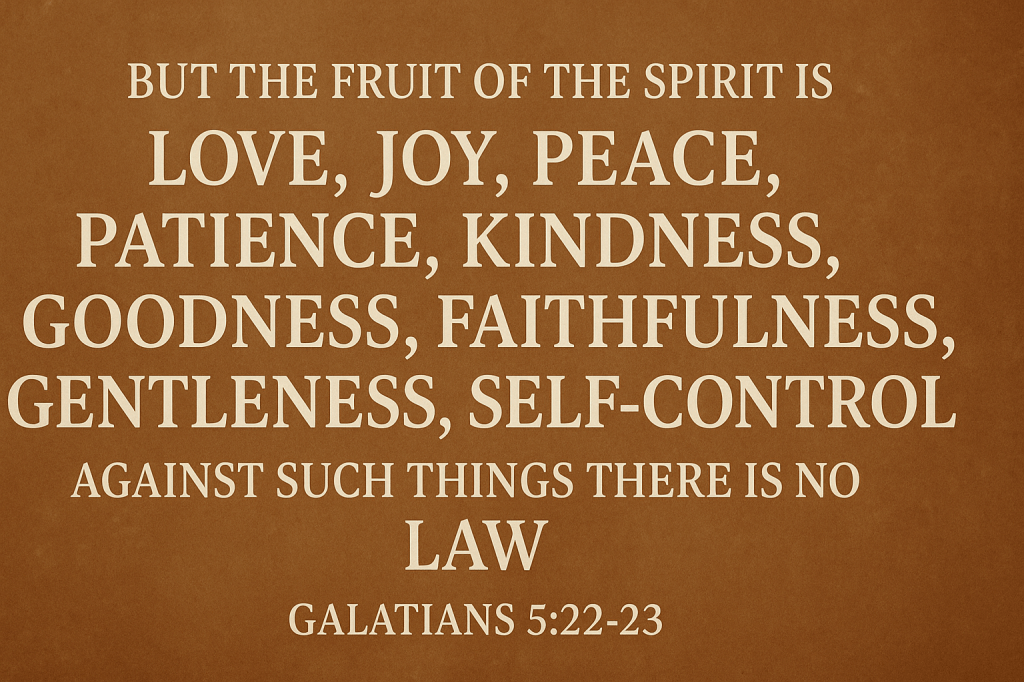
The contrast to these destructive patterns is the fruit of the Spirit. This fruit is singular, not plural, because it all flows from one source: the Holy Spirit dwelling within believers. This fruit includes love, joy, peace, patience, kindness, goodness, faithfulness, gentleness, and self-control. No law exists against such qualities.
Love here means choosing to care for others regardless of whether they deserve it or make us feel good. It reflects how Christ loved humanity, not because people were lovable, but by deliberate choice. This love for fellow believers serves as evidence that someone has passed from spiritual death to life.
Joy is a deep sense of well-being completely independent of circumstances. Unlike happiness, which depends on favorable situations, joy remains constant even during terminal illness or severe hardship because it flows from relationship with Christ through the Spirit’s presence. Peace means the calm assurance of being right with God. This tranquility persists regardless of external difficulties or testing circumstances.
Patience involves enduring hardships and accepting irritating situations with grace, recognizing that God allows all circumstances for purposes of growth and transformation.
Kindness shows tender concern for others, treating them gently as the Lord treats believers. It makes one’s presence a blessing rather than a burden to others.
Goodness reflects moral and spiritual excellence expressed through active kindness toward others. Faithfulness demonstrates loyalty and trustworthiness in all relationships and commitments. Gentleness describes a humble attitude that remains patiently submissive even when offended, free from revenge or retaliation.
Self-control enables believers to restrain their passions and appetites, measuring their words and actions carefully before responding.
Walking in the Spirit happens through immersion in God’s word. The Spirit leads believers through Scripture, never contradicting what He inspired. This is why genuine Christians develop a hunger for the Bible and expect teaching to come from it. The Spirit uses the word as believers read and meditate on it to direct them into lives pleasing to God. Living with purpose means living in obedience to Scripture, even when that obedience creates difficulty or conflicts with personal preferences. This walk requires constant vigilance because sin always waits at the door for an opportunity to attack. The flesh never becomes sanctified or holy.
No amount of human effort or determination can accomplish this spiritual walk. Just as the temple could not be rebuilt through human might or power but only through God’s Spirit, learning to walk in the Spirit cannot happen through personal strength. It requires being filled with the Holy Spirit. The Spirit does His work perfectly and simply wants believers to yield to Him.
But I say, walk by the Spirit, and you will not carry out the desire of the flesh. For the desire of the flesh is against the Spirit, and the Spirit against the flesh; for these are in opposition to one another, in order to keep you from doing whatever you want.
A family trio rooted in Tennessee has a new album out, and it carries a message of hope and faith. StowTown Records has announced the release of Rise and Shine, the second full album from Sunday Drive. The group made up of husband and wife Jeff and Misty Treece, and Jeff’s brother Dusty Treece.
The album blends new original songs with reimagined older favourites and a well-known modern church standard, aiming to reach gospel music fans of all ages.
Sunday Drive is no stranger to success on the charts. The trio has earned Top 40 radio songs with “Grace and Glory,” “There’s Always A Place At The Table,” “God Will Be God,” and “Shine Down On Me.” They have also taken home multiple Vocal Group and Entertainer of the Year honours, and they remain a beloved name in southern and country gospel music. Beyond the recording world, they are regulars at Dollywood Theme Park, where they perform more than 40 dates each year.
Rise and Shine was produced by multi-award-winning Wayne Haun, whose personal connection to the Treece family runs deeper than the recording studio. Haun grew up in the same town as the group and shared his feelings about the project:
“While each album is special to me, this one is a little extra special. Most people don’t know, but I grew up in the same town as this talented family. As a child and even into our teenage years, our paths crossed many times at concerts and church services. Jeff and I would dream of making music together, and now here we are on the other side of it all these years later. I’m glad the Lord gives us the desires of our hearts.”
The album also holds a deeply personal meaning for Haun because of the Treece family’s matriarch, Violet Treece, who passed away before her time. He explained:
“This album is also special to me because as a child one of my favorite songs was written by Violet Treece, who left us way too soon. She was a mentor and encourager to me and even prayed over me that God would use my gifts. I was beyond happy that ‘The Way, The Truth, The Life’ was chosen from her song portfolio for this project. When I was a kid, they called it their ‘Taco Bell Song,’ and now it has a Caribbean feel, but the timeless message is still the same.”
Among the other songs on the record is “Through It All,” a classic written by legendary gospel artist Andraé Crouch. The track features sweeping harmonies from Hillcrest Nashville alongside Misty Treece’s lead vocal, offering a powerful reflection on God’s faithfulness. Also featured is “Mountains Are Made to Climb,” written by Jeff Treece, Joel Lindsey, and Donna King. That song includes a guest performance from TaRanda Greene, whose voice weaves naturally into the group’s layered harmonies.
Dusty Treece captured the spirit behind the album simply and directly:
“We are so excited about our new album! We want it to feel like a burst of sunlight, full of joy & hope. We wanted every song to celebrate God’s faithfulness and His promise of brighter days ahead. We pray this project blesses you as much as it blessed us recording it.”
With Rise and Shine, Sunday Drive offers listeners music grounded in harmony, family, and unwavering faith.






 Texas Gospel Canada Southern Gospel Radio