Southbound takes stock of what’s ahead while a new song does the talking now

AMY TURNER

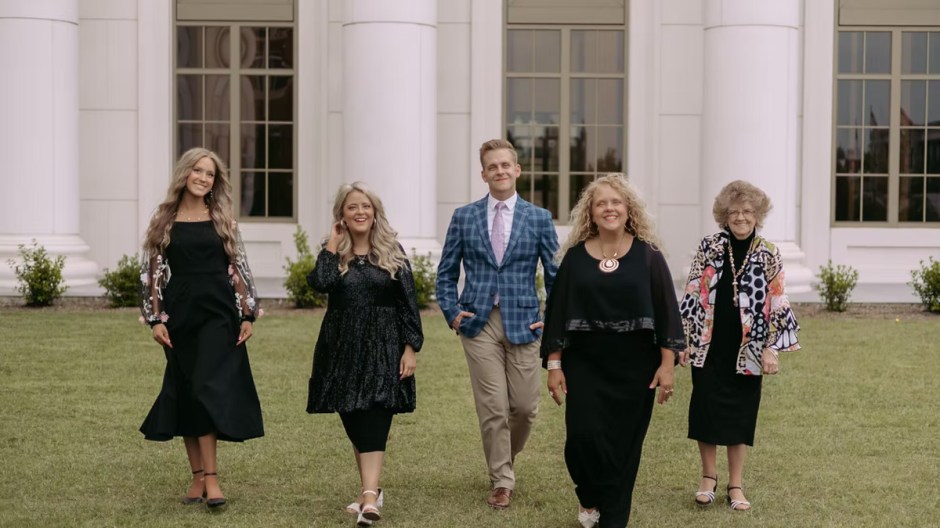
The Florida-based gospel quartet Southbound has been quietly productive of late, with new music taking shape in the studio even as the group’s current release continues to reach listeners. In a candid moment, vocalist Jody Braselton offered a look inside the recording process and the themes driving the work.

The group is currently laying down tracks for what Braselton describes as a brand new project, still in its early stages. Among the songs recorded so far, one stands out for him personally. “We’re in the studio recording a brand new project,” he said. “And out of all the songs that we’ve done so far, and we’ve only recorded a few of them, I think my favorite that Pastor Clint Brown wrote that we are recording right now is a song called Miracles.”

The song, penned by Pastor Clint Brown, carries a message that Braselton says speaks to something universal. “And it just talks about how as many miracles as God has done in my life, in their life, and maybe even in your life over the years, there is no shortage of miracles,” he explained. “Whatever it is you need in your life, God didn’t run out of miracles. He’s not done healing. He’s not done setting free. He’s not done saving people and changing their lives.”

While that project moves forward behind closed doors, Southbound’s current release is already in rotation on Texas Gospel. The song, titled “Nothing,” takes an unconditional view of God’s love, exploring what it would take to separate a person from His grace. The short answer, according to the lyrics: nothing.

The song poses a series of searching questions before arriving at its repeated refrain. “What could I do to forfeit and lose all of this grace you’ve given me,” the lyrics ask, “what could I say to push you away God what could make you ashamed of me.” From there, the song builds toward its central declaration: “there’s nothing there’s nothing there’s nothing I’ve been through there’s nothing I can do that could keep me from you that could break us apart or make you regret your scars.”

The writing leans into imagery of ransom, return, and redemption, with lines that frame God’s pursuit of humanity in strikingly relational terms: “what would you do be willing to lose to pay off my ransom everything where would you run so bring home your son when you hear me calling anywhere.” Later, the song turns to the limits of what can stand against grace: “the never strong enough the power of your blood what can you love what can stop amazing grace what’s left inside that grave there’s nothing there’s nothing.”

For a group whose catalogue has long centred on themes of faith and restoration, “Nothing” fits neatly into that tradition, even as “Miracles” promises to push that conversation forward once the new project finds its way to listeners.

He was a sweetheart of a man’: the gospel project that brings personal memories of Elvis to life

AMY TURNER

His voice sold millions of records, his name still sells out tribute concerts, and his gospel recordings remain some of the most emotionally raw performances in American music history. But to Billy Blackwood, Elvis Presley was something simpler, and more human, than any of that.

“He was just the kind of guy, honestly, it was hard not to love him,” Blackwood recalled. “He was just a sweet man, just a gentle, real, loving man.”

It is that personal dimension, the Elvis who existed in small rooms with a handful of people rather than on stadium stages, that gives a new collaborative recording project its particular weight. Ronnie Booth, one of gospel music’s most respected voices, has joined forces with the Blackwood Brothers Quartet for “Together: Gospel Tribute to the King,” a collection built around the sacred songs that shaped Elvis Presley’s faith and defined his spiritual identity.

Billy Blackwood, who sings baritone and has worked as a songwriter throughout his career, is one of the few people still active in gospel music who knew Presley personally. He was the younger son of James Blackwood, the quartet’s longtime leader and public face, and those family connections placed him in rooms where Elvis was simply himself.

“When you’re in a room this size and there’s eight or 10 people around, you get to know what somebody’s like when you have enough exposure,” Blackwood said. “I think his life and his thinking, maybe his heart got really corrupted by what the world had to offer. But my gosh, I just loved him. He was a sweetheart of a man.”

The Blackwood Brothers Quartet was not merely a successful singing group. For nearly a century, it has functioned as something closer to an institution. Founded in 1934 by brothers Roy, Doyle, and James, along with Roy’s son R.W., the quartet began building a following during an era when gospel music was still finding its place in the broader American cultural landscape.

The early decades were not without tragedy. In the late 1950s, Roy and Doyle retired from the road, and in 1954 R.W. was killed in a plane crash, a loss that shook the gospel world. James Blackwood, however, rebuilt. Under his leadership, the quartet assembled a new lineup of singers and took their music far beyond the American South. They performed in all fifty United States and every Canadian province. They carried their sound to Great Britain, across Europe, into the Middle East and Northern Africa, south to South Africa, and across Asia to Japan, Taiwan, Thailand, South Korea, Hong Kong, and the Philippines. By almost any measure, they became the best-known name in gospel music history.

James Blackwood died in 2002, but the tradition he built did not end with him. His sons, Jimmy (James Jr.) and Billy, carried the work forward. More recently, Jimmy retired after 49 years on the road, leaving Billy as the keeper of a legacy that now spans more than eight decades.

Elvis Presley’s relationship with gospel music was not a publicity exercise. He grew up in Assembly of God churches in Mississippi and Tennessee, singing hymns long before he ever walked into a recording studio. The Blackwood Brothers were part of that world, and young Elvis was part of their audience. That connection eventually grew into something more personal, and Billy Blackwood’s recollections of Presley carry the kind of detail that only comes from genuine proximity; not the carefully managed image of a superstar, but a man who could sit comfortably in a small group and show his actual nature.

Blackwood’s tenderness in describing Presley is matched by an honesty about the pressures that made his later life so complicated. The faith, he suggests, was always real, even when everything around it was not.

One track from the project, “Put your hand in the hand,” is currently in rotation on Texas Gospel now. For Ronnie Booth and the Blackwood Brothers, the album represents something beyond a conventional tribute; it is a recording made by people who carry a direct connection to gospel music’s most storied era, honouring a performer whose faith, whatever its complications, was entirely genuine. For Billy Blackwood, that faith was the truest thing he ever saw in Elvis Presley, and it is clearly the part of him he remembers best.

The Kingsmen mark 70 years with an album that looks back and forward at once

AMY TURNER

Seven decades is a long time for any musical act to remain not just active, but relevant. For the Kingsmen, a southern gospel quartet whose roots stretch back to the mid-1950s, that longevity is both the subject and the occasion for their upcoming album, “Still Jesus,” due July 10 on Horizon Records.

Subtitled “A Seventieth Anniversary Celebration,” the record draws from multiple eras of the group’s history, weaving together vault recordings, newly arranged older material, and five original songs written specifically for this project. It is a broad undertaking, and one the band approached with deliberate care.

“We have always been diligent to honour our Kingsmen roots,” said guitarist Alan Kendall, “but those exact same roots also tell us that the Kingsmen have always been a forward-thinking group.” That tension between preservation and progress shapes the album’s structure. Some tracks pull from the catalogue, updated in arrangement but faithful in spirit. Others were unfamiliar to the band entirely, including a song written by Squire Parsons in 1989 that the group had never previously recorded.

The material spans a considerable sonic range. “I’ll Live Again” represents the group’s more traditional sound, while “I Forgive Your Sin” and “When Sunday Morning Dawned” feature expansive orchestration. Country-inflected tracks like “That Very Moment” and “I Stand Upon The Rock of Ages” broaden the palette further.

Songwriters contributing new material include Ronny Hinson, Kenna Turner West, Joseph Habedank, Lee Black, and Rachel McCutcheon, each of whom has had charting success in the gospel genre.

The album closes with what Kendall describes as the most iconic song in the group’s history, “Is That the Old Ship of Zion,” performed by a 19-member Kingsmen Alumni Choir drawn from across the group’s seven-decade lifespan.

Brandon Reese, who manages the group and plays drums, frames the project in terms of both family legacy and personal faith. His father, Ray Dean Reese, is a legendary figure in southern gospel music, and the younger Reese has been integral in steering the Kingsmen through recent years. “Most importantly, it is my prayer that you hear something in this album that helps you in your every day walk,” he said, “because no matter the issue, the answer is Still Jesus.”

The album is available for pre-save ahead of its July release.

Anthem Edition turns up the tempo with country-tinged gospel release

TEXAS GOSPEL VOLUNTEER

Anthem Edition has released a new single that marks a noticeable shift in tone from the group’s previous work, trading reverence for momentum and leaning into country instrumentation to carry its message.

The track, “Something’s Going On ‘Round Here,” follows “In Christ Alone,” a more stately and reflective release. Where that song settled into solemnity, the new single opens with a guitar lick and builds through three verses, passing the vocal lead between members as the energy climbs.

The song is built around the figure of Jesus moving through Galilee, rendered not as a theological treatise but as word-of-mouth excitement, the kind of talk that spreads through a town before anyone fully understands what they are witnessing. Its chorus lands somewhere between storytelling and invitation: Something’s going, going on ’round here / Folks are gatherin’ in from far and near.

Much of the track’s texture comes from studio musician David Johnson, who plays both resonator guitar and fiddle. The instrumentation gives the song a country flavour that sets it apart from the smoother production often associated with Southern Gospel, and reportedly gives it a different kind of life in live performance. Tim Rackley, one of the group’s founding members, has said the song has already begun building energy at concerts where it has been tested.

The single was written by Kenna Turner West, Jason Cox, and Belinda Smith, three writers with established records in Gospel music. The song is available in Dolby Atmos spatial audio on Apple Music, Amazon Music, and TIDAL.

Anthem Edition has a longer history than its current name suggests. The group formed in 2003 as The Old Paths, founded by Rackley and Doug Roark. It operated as a trio before expanding to a quartet, eventually signing with Sonlite Records in 2012. That period produced two number-one hits and a Singing News Fan Award for Favourite New Quartet.

The group went on hiatus in 2015 and returned to touring in 2017. In late 2022, it rebranded as Anthem Edition and brought on Andrew Utech as bass vocalist. Tenor Cameron Edens joined in the fall of 2023, completing the current lineup.

The Cathedrals’ Interwoven streams for the first time, decades after the group’s farewell

TEXAS GOSPEL VOLUNTEER

For more than two decades, a particular recording by The Cathedrals sat largely beyond reach for most gospel music fans, available only to those lucky enough to own the original physical release. That changes now. Interwoven, one of the beloved quartet’s most cherished albums, has made its debut on digital streaming platforms for the first time, released through StowTown Records with the support of the families of founding members Glen Payne and George Younce.

It is, by any measure, a long time coming.

The Cathedrals were active from 1964 to 1999, rising from their origins as the house group for the Cathedral of Tomorrow church to become what many consider the most popular gospel quartet of their era. Payne and Younce were the heart of that sound, their voices and ministries inseparable from the group’s identity. When the quartet retired in December 1999, they left behind not just recordings but a generation of artists they had mentored, including Ernie Haase, Scott Fowler, Roger Bennett, Gerald Wolfe, Mark Trammell and Kirk Talley.

Interwoven captures the quartet at the height of that artistry. The album is a collection of standards and hymns, rich in harmony and deliberate in its emotional weight, featuring Payne and Younce alongside Kirk Talley and Steve Lee, with Roger Bennett’s piano work anchoring the arrangements throughout. A song like “No Tears In Heaven” illustrates what made the group so enduring: voices in service of something larger than performance, delivering a message of hope that still registers decades after the recording was made.

For Darla Payne, daughter of the late Glen Payne, the release carries a weight that goes well beyond nostalgia. “Interwoven is more than a re-release,” she said. “For our family, it is the continuation of a ministry that meant everything to Dad and to George. These songs brought hope, encouragement and joy to so many people through the years, and we are grateful that listeners can now experience this music again in a new way through streaming platforms.”

That gratitude is not simply sentimental. The Cathedrals have never entirely faded from cultural memory, sustained by devoted fan communities, tribute pages and listeners who have continued passing the recordings along for years. But streaming opens a different kind of door, one that allows a younger audience to encounter the music without needing to track down a physical copy or inherit it from a grandparent’s collection. It is the difference between preservation and genuine accessibility.

StowTown Records, which distributes through Sony/Provident, has positioned the release as both a celebration of what The Cathedrals built and an opportunity for the music to find a wider audience than it has reached in years. Whether that audience arrives already familiar with gospel quartets or entirely new to the form, Interwoven makes a convincing case for why The Cathedrals still matter. The harmonies are tight, the arrangements are confident, and the sense of conviction behind the performances is unmistakable.

Twenty-five years after the group sang their last notes together, it turns out there was still something waiting to be heard.