
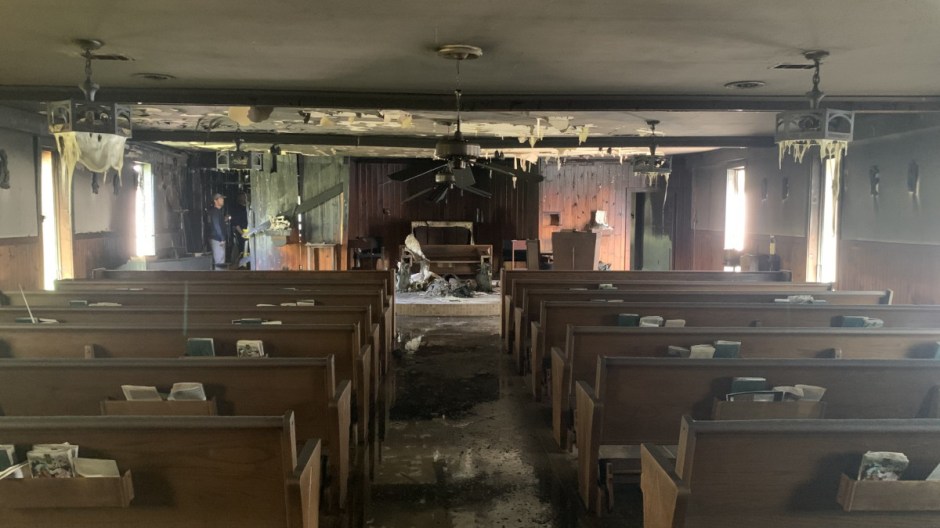
(Photo courtesy Diocese of Alexandria Facebook page)
TEXAS GOSPEL STAFF
COLUMBIA, La. — St. John Chapel in Columbia was burglarized, vandalized and intentionally set on fire last week, damaging the only Catholic church in Caldwell Parish, Louisiana according to a press release from the Diocese of Alexandria.
The incident occurred during the late evening hours of Thursday, March 26, or the early morning of Friday, March 27, the diocese said. No parishioners were present at the time, and no injuries were reported.
Local authorities confirmed that suspects have been identified and arrested in connection with the crime. Initial assessments indicate that portions of the church were desecrated during the incident, according to the release. Local media in Alexandria identify the suspects as a male 19, and a male, 20.
Alexandria Bishop Robert Marshall, Father Robert Johnson, the church’s pastoral administrator, and parishioners were on site Friday to cooperate with civil authorities and assess the extent of the damage.
“It is deeply unfortunate that this has occurred at any time,” Marshall said in the release, “but especially as we prepare to enter the most sacred season of Holy Week and Easter.”
The diocese said Masses will be celebrated each Sunday at 11:30 a.m. at the Winters Clinic, located next to Caldwell Memorial Hospital at 421 Main St. in Columbia, until further notice.
The Diocese of Alexandria expressed gratitude to first responders for their efforts in addressing the fire and securing the site.
A restoration fund has been established to assist with repair and recovery efforts and is available through the Diocese of Alexandria website at freedonationkiosk.com. The diocese asked the faithful to keep the St. John Chapel community in their prayers.

 Texas Gospel Canada Southern Gospel Radio