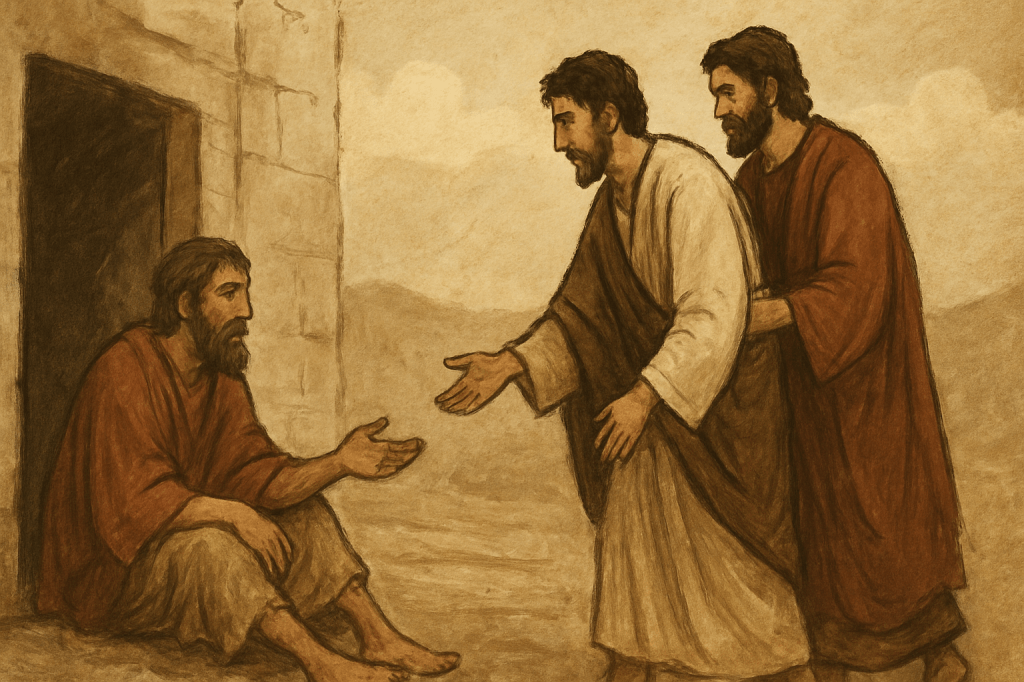
In Genesis 26:1-2, the Bible tells of a severe famine that struck the land. It was not the first time such hardship had come; a famine had also happened in Abraham’s lifetime. During this crisis, Isaac went to the region of Gerar, where Abimelech, the Philistine king, ruled. There, God spoke directly to Isaac, telling him not to travel to Egypt for relief but to remain where God would guide him.
This instruction called for great faith. Staying in a place where food was scarce and survival uncertain was not an easy choice. For Isaac, remaining in the land meant risking his safety and that of his family. Yet, he obeyed because he trusted that God’s direction was better than his own understanding.
Real trust in God often asks for courage. It means believing that God will honour His promises even when there is no visible proof or clear path forward. Faith does not always lead to comfort, but it leads to a deeper reliance on the One who never fails. When life feels uncertain and choices seem risky, holding on to God’s word is the most secure place to be.
Francis Collins, founder of the BioLogos faith and science organization, received the National Academy of Sciences Public Welfare Medal on Jan. 22 for his groundbreaking genetics work and leadership of the Human Genome Project. The academy’s most prestigious honour, established in 1914, recognizes exceptional scientific contributions serving public welfare.
Collins directed the National Center for Human Genome Research beginning in 1993, overseeing hundreds of researchers who completed the first full human genome sequence. This achievement revolutionized biomedical research and established foundations for precision medicine and genetic disease treatments. He implemented the Bermuda Principles, requiring daily public release of genome data in an unprecedented transparency commitment.
The geneticist was appointed by President Barak Obama to head the National Institutes of Health, a position he held from 2009 to 2021, serving under three presidential administrations whilst managing responses to the Ebola outbreak and COVID-19 pandemic. He championed Alzheimer’s research funding, launched the BRAIN Initiative for neuroscience advancement, and initiated the Cancer Moonshot programme.
Collins helped develop the Genetic Information Nondiscrimination Act, safeguarding Americans from genetic data exploitation. He later advised President Joe Biden from 2022 to 2023, co-leading the President’s Council of Advisors on Science and Technology and directing a national hepatitis C elimination initiative.
His numerous accolades include the Presidential Medal of Freedom, National Medal of Science, Gairdner Foundation International Award, Templeton Prize, and membership in Britain’s Royal Society.
Collins has authored several influential books blending science and Christian faith. His key works include the bestseller The Language of God, which argues for the compatibility of faith and science, and the 2024 book The Road to Wisdom, which addresses truth and trust in a polarized world.
The National Academy of Sciences Public Welfare Medal presentation will occur during the academy’s 163rd annual meeting on April 26.
When Jesus spoke to Peter about building his church, he made a statement that has been understood in different ways throughout history. He said that the gates of hell would not defeat his church, and he mentioned a rock as its foundation. The Roman Catholic Church teaches that Peter himself was this rock, pointing to the idea that Peter went to Rome and became the first pope. However, there is no historical evidence to support this claim.
Looking closely at what Jesus actually said reveals a different meaning. Right after this conversation, Jesus called Peter “Satan” and told him to get out of his way. This happened because Peter was trying to stop Jesus from going to the cross. Later, Peter showed his weakness again when he denied knowing Jesus three times on the night of his arrest. Do these verses not make it clear that Peter was too unstable to serve as the foundation for the entire church?
The key to understanding this passage lies in recognizing what Jesus was really pointing to. When Peter declared that Jesus was the Christ, the Son of the living God, he spoke a truth that came directly from God the Father. Jesus acknowledged that Peter was like a small stone, but the rock he would build his church on was something much larger. It was the truth of Peter’s confession itself. The church stands on the bedrock truth that Jesus is the Messiah and the Son of God. This confession, not any human leader, forms the unshakeable foundation that hell cannot overcome.
In every generation, humanity wrestles with the question of God’s existence. Some insist that belief in God is unnecessary, while others maintain that without Him, life itself loses coherence. I say that when God is removed from human thought, confusion soon follows and morality becomes uncertain.
Friedrich Nietzsche once declared, “God is dead.” He did not mean that God had literally died, but that society had chosen to live as if He did not exist. Nietzsche warned that when humanity erases God, it also erases the foundation that gives life direction. Without belief in something higher, he said, people lose any sense of what is truly good or evil. His words, though meant as observation, in a way became prophecy: Where God is denied, despair and moral confusion soon take root.
When people claim that evil exists, they assume the existence of good. But to recognize good and evil, there must be a moral standard. How do you know the difference? Without God, that standard disappears. Morality becomes a matter of opinion, shifting with emotion or culture. What one person praises, another condemns; and without a higher authority, neither can claim to be right. Even the most honest atheist struggles to explain why anyone “ought” to do good if there is no eternal reason to prefer it. The reality of evil itself points toward a moral lawgiver beyond humanity. Atheism offers no empirical evidence upon which to judge good or evil.
If life has no Creator, it must be the result of chance; that is, matter moving randomly until, somehow, consciousness appeared. Some find this idea freeing, calling it “liberating” to think there is no divine plan. Yet liberation without purpose is emptiness. How can meaning arise from accident? If all we are is the product of blind forces, then love, justice, and beauty are illusions created by chemicals in our brains. But deep down, every human heart knows that meaning cannot be invented out of nothing. The longing for purpose, the desire to live for something greater, points to the existence of something greater.
Without God, even hope begins to vanish. People suffer losses and tragedies that reason alone cannot comfort. I read a web post once that described a man in Iraq who said that before help came, his people lived in constant pain; afterward, they still had pain, “but now we have pain with some hope.” Hope gives life strength to endure suffering, to believe that tomorrow holds something more. When God is removed, nothing guarantees that justice or peace will ever come.
The very existence of the universe also points to a Creator. Everything that exists depends on something else for its being. The chain of causes cannot stretch back forever; there must be one eternal cause that depends on nothing. That uncaused being is God. The order and precision of nature further reveal design: the balance of physical laws, the complexity of DNA, the harmony of systems that make life possible. Chance cannot explain such intricacy any more than an explosion could produce a symphony.
But the question is not only whether God exists, it is whether He has made Himself known. The Christian faith declares that God entered history through Jesus Christ. In Him, the deepest needs of the human heart are met: truth, forgiveness, and love. At the cross, justice and mercy meet; through the resurrection, life triumphs over death. Christ revealed that the God who made the universe is not distant, but personal. And He is one who knows, loves, and redeems.
Human beings are not machines. We think, feel, and long for eternity because we bear the image of a personal God. Without Him, life is a sequence of causes without meaning; with Him, every moment gains eternal worth. The world without God is a silent void; the world with God is alive with meaning.
for in Him we live and move and exist, as even some of your own poets have said, ‘For we also are His descendants.’
The Apostle Paul’s message to the Galatians shows the deep concern of a pastor for the spiritual health of the church. His words show a struggle that continues today: the danger of drifting away from the truth of the gospel. Paul’s letter to the Galatians, especially in chapter 4, expresses his distress that believers were turning to false teachings and abandoning the message of salvation through faith in Christ alone.
Paul begins by urging the Galatians to be like him because he had once been like them. He meant that he wanted them to be free from the demands of the Jewish law as a means of salvation. Paul himself, though born a Jew and raised under the Mosaic law, had come to realize that no one could be saved by following it. The law only showed human sinfulness and pointed to the need for Christ. His plea was simple: stop trusting in religious rules to be saved, and trust instead in Christ’s finished work.
Paul also reminded them of the close relationship they once shared. When he first arrived in Galatia, he was ill, likely suffering from a painful eye condition. Despite his appearance, the Galatians had welcomed him warmly, treating him with great kindness and respect. They received his message as if it had come from Christ himself. They were so grateful that Paul said they would have given him their own eyes if it were possible. But now, something had changed. The same people who once loved him were beginning to see him as an enemy.
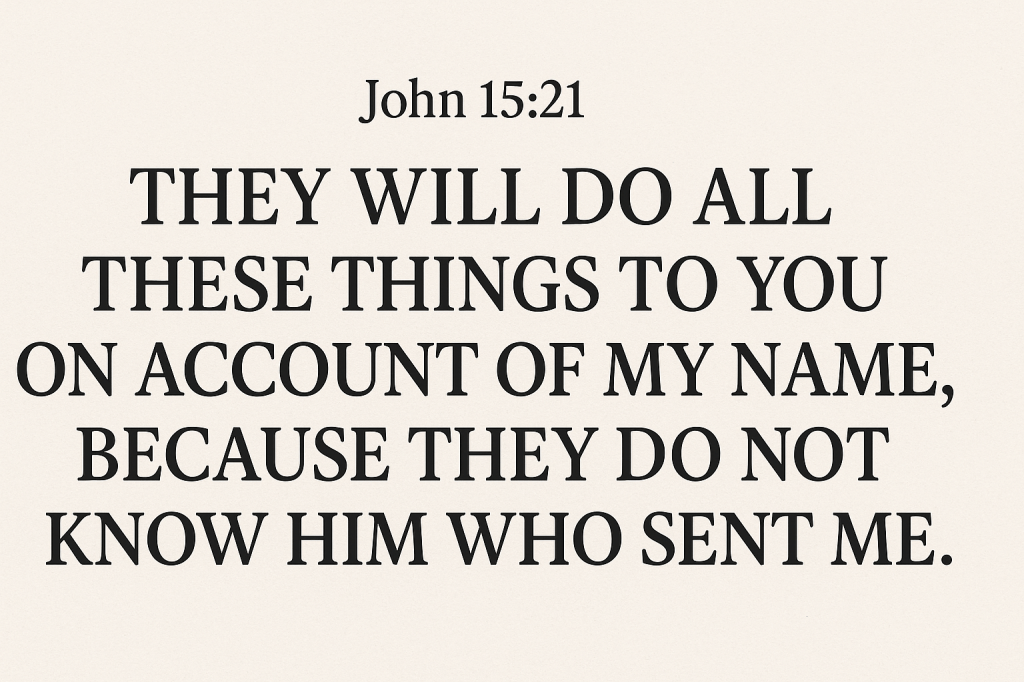
The reason for this change was Paul’s honesty. He had told them the truth about the false teachers who were trying to lead them back under the law as a way to salvation. These teachers were persuasive and passionate, but their motives were not good. They wanted to draw believers away from the true gospel and make them followers of their own teachings. Paul asked a painful question: “Have I become your enemy because I tell you the truth?” He knew that people often resist correction, preferring comforting lies over hard truths.
This struggle between truth and deception is not limited to Paul’s time. In his first letter to Timothy, Paul warned that as history moves toward the return of Christ, some will abandon the faith. They will follow deceiving spirits and false teachings. He said that such teachings would distort God’s good gifts, such as marriage and food, and turn them into matters of guilt or restriction. Paul explained that everything God created is good when received with thanksgiving. But in the last days, truth would be rejected.
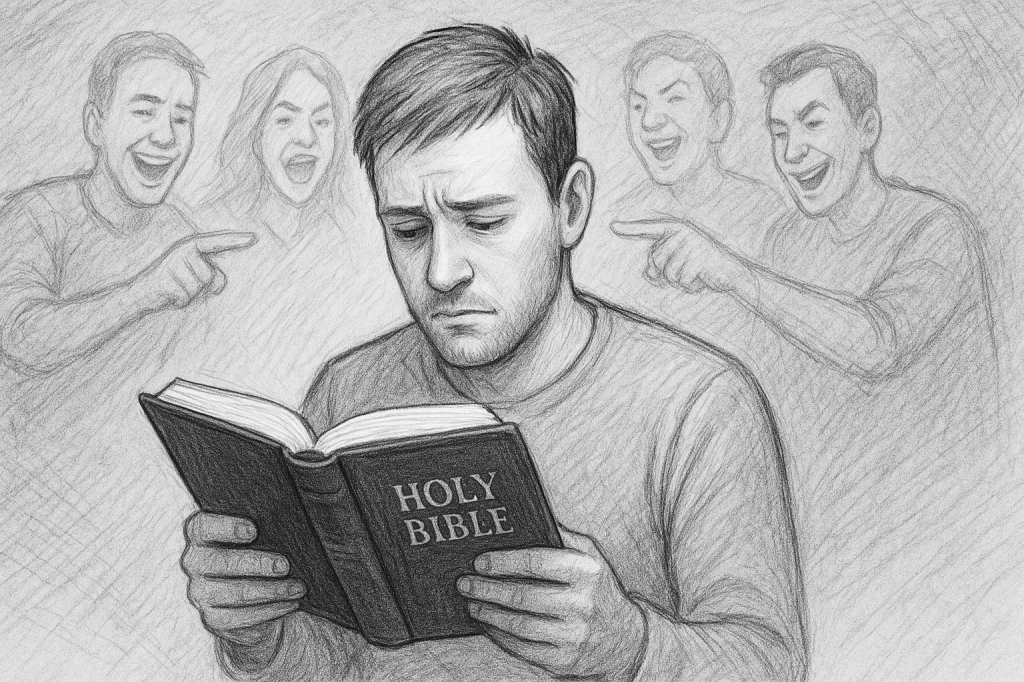
We can see this happening today. There are people reject the moral and spiritual truths that guided earlier generations. What was once respected is now ridiculed, and what was once seen as wrong is now celebrated. This confusion reflects a society that has turned away from God’s Word. Paul’s warning reminds believers to stand firm, to recognize the difference between truth and lies, and to live according to Scripture even when it is unpopular.
Paul also taught that truth must be shared with love. In his letter to the Ephesians, he explained that God gave the church pastors and teachers to help believers grow in unity and maturity. Christians are not to remain like children who are easily misled by false ideas. Instead, they should build each other up by speaking the truth in love. This can be difficult because truth sometimes hurts. But silence in the face of error is not love. It is neglect.
Too often today Christians hesitate to correct one another, fearing rejection or offence. Yet Paul shows that love sometimes requires hard words. Just as a parent disciplines a child for their good, believers must at times speak firmly to each other to prevent harm. Truth spoken with care and humility is an act of love. It protects the church and helps each member grow in faith.
Paul’s closing words to the Galatians express both affection and worry. He calls them “my little children” and compares his concern for them to the pain of childbirth. He had already laboured to bring them to faith, but now he feels as though he must labour again until Christ is fully formed in them. His greatest fear was that some of them had not truly understood the gospel and that his work among them might have been in vain.
Consider Paul’s words and think about faith. It is not a one-time event but a growing relationship with Christ. Pastors, like Paul, carry a heavy burden for their people. They long to see believers remain strong, rooted in truth, and living lives that reflect genuine faith. In a world filled with confusion, deceit, and shifting values, the call remains the same: hold fast to the truth of God’s Word, live by it, and speak it with love.
Therefore, ridding yourselves of falsehood, speak truth each one of you with his neighbor, because we are parts of one another.