

RICHARD CORDER
The measure of genuine salvation is not found in what someone claims to know or says they believe. Instead, it is revealed through how a person actually lives their daily life. This practical test of faith centers on whether someone walks in the Spirit or continues following the desires of their old nature.

When a person becomes a Christian, an immediate internal conflict begins. Before conversion, people simply do whatever they want, following their natural desires without spiritual resistance. However, once someone truly comes to Christ, the Holy Spirit takes residence within them and begins leading them toward God’s ways. This creates tension between what the flesh wants and what the Spirit desires. The flesh refers to more than just physical temptations. It encompasses everything related to self-centered living, including self-promotion, selfish priorities, and insisting on one’s own way. This stands in direct opposition to life in the Spirit, which operates through submission to God.
Christ provides the perfect model of this submitted life. Although He was God, He chose to submit fully to the Father’s will. He possessed the Spirit completely and demonstrated what it means to walk in obedience rather than self-will. This same struggle between flesh and Spirit defines the Christian experience. The flesh constantly seeks its own exaltation while the Spirit calls believers toward obedience to God’s word.
Consecrated, Lord, to Thee.
Take my moments and my days;
Let them flow in ceaseless praise,
Let them flow in ceaseless praise.
The works of the flesh are not mysterious or hidden. They include sexual sins like adultery, fornication, uncleanness, and inappropriate behavior. They also encompass false religious practices such as idolatry and sorcery. Additionally, they involve destructive social behaviors including hatred, quarreling, jealousy, angry outbursts, etc. Those who continuously practice such things without repentance will not inherit God’s kingdom. This warning addresses people who make these sins their lifestyle and refuse to abandon them, not believers who occasionally stumble but genuinely desire to live righteously.
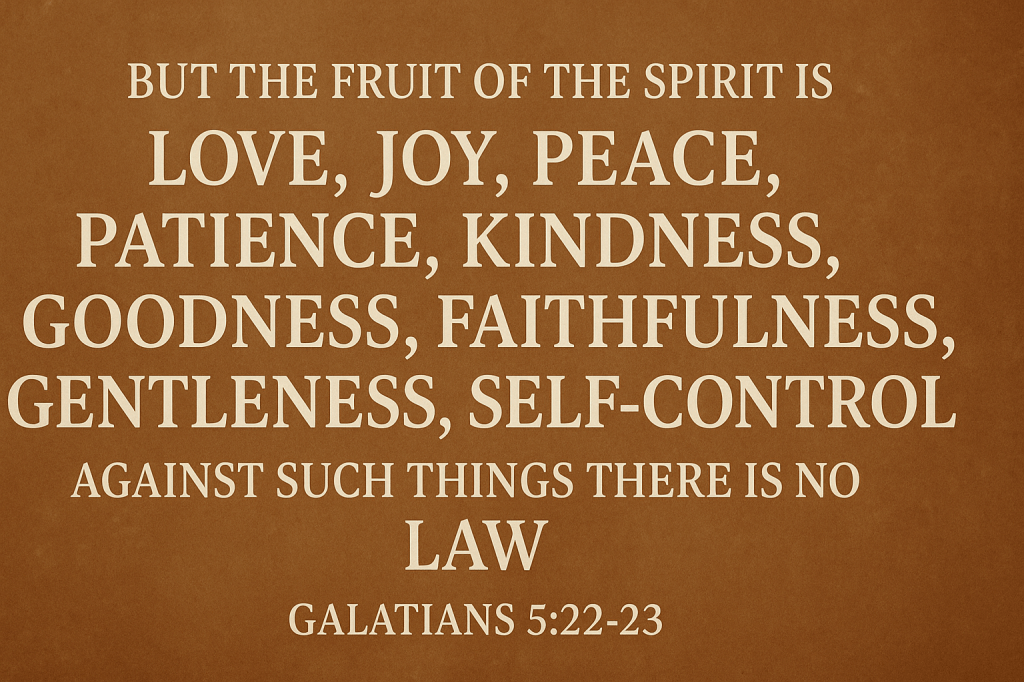
The contrast to these destructive patterns is the fruit of the Spirit. This fruit is singular, not plural, because it all flows from one source: the Holy Spirit dwelling within believers. This fruit includes love, joy, peace, patience, kindness, goodness, faithfulness, gentleness, and self-control. No law exists against such qualities.
Love here means choosing to care for others regardless of whether they deserve it or make us feel good. It reflects how Christ loved humanity, not because people were lovable, but by deliberate choice. This love for fellow believers serves as evidence that someone has passed from spiritual death to life.
Joy is a deep sense of well-being completely independent of circumstances. Unlike happiness, which depends on favorable situations, joy remains constant even during terminal illness or severe hardship because it flows from relationship with Christ through the Spirit’s presence.
Peace means the calm assurance of being right with God. This tranquility persists regardless of external difficulties or testing circumstances.
Patience involves enduring hardships and accepting irritating situations with grace, recognizing that God allows all circumstances for purposes of growth and transformation.
Kindness shows tender concern for others, treating them gently as the Lord treats believers. It makes one’s presence a blessing rather than a burden to others.
Goodness reflects moral and spiritual excellence expressed through active kindness toward others.
Faithfulness demonstrates loyalty and trustworthiness in all relationships and commitments.
Gentleness describes a humble attitude that remains patiently submissive even when offended, free from revenge or retaliation.
Self-control enables believers to restrain their passions and appetites, measuring their words and actions carefully before responding.
Walking in the Spirit happens through immersion in God’s word. The Spirit leads believers through Scripture, never contradicting what He inspired. This is why genuine Christians develop a hunger for the Bible and expect teaching to come from it. The Spirit uses the word as believers read and meditate on it to direct them into lives pleasing to God. Living with purpose means living in obedience to Scripture, even when that obedience creates difficulty or conflicts with personal preferences. This walk requires constant vigilance because sin always waits at the door for an opportunity to attack. The flesh never becomes sanctified or holy.
No amount of human effort or determination can accomplish this spiritual walk. Just as the temple could not be rebuilt through human might or power but only through God’s Spirit, learning to walk in the Spirit cannot happen through personal strength. It requires being filled with the Holy Spirit. The Spirit does His work perfectly and simply wants believers to yield to Him.
But I say, walk by the Spirit, and you will not carry out the desire of the flesh. For the desire of the flesh is against the Spirit, and the Spirit against the flesh; for these are in opposition to one another, in order to keep you from doing whatever you want.
Galatians 5:16-17
 Texas Gospel Canada Southern Gospel Radio